
The Science Behind Casino Game Probabilities
Understanding the true probabilities in casino games is fundamental for any player looking to engage with online platforms, and casinokaasino.co.uk offers a wide variety of options. At its core, probability dictates the likelihood of a specific outcome occurring. In casino games, these outcomes range from winning a hand of blackjack to hitting a specific number on a roulette wheel or landing a lucrative symbol combination on a slot machine. Each game is built upon a mathematical framework designed to ensure a house edge, meaning the casino has a statistical advantage over the long term.
These probabilities are not arbitrary but are meticulously calculated and often regulated to ensure fairness. For card games, probabilities are influenced by the deck composition and the number of cards dealt or remaining. For games of chance like roulette or slots, outcomes are typically determined by random number generators (RNGs) or physical mechanisms that produce unpredictable results. Acknowledging these underlying probabilities empowers players to make informed decisions, manage their wagers more effectively, and set realistic expectations for their gameplay at any online casino.
Decoding Slot Machine Payout Percentages (RTP)
Slot machines, a perennial favourite in online casinos, operate on principles of probability governed by their Return to Player (RTP) percentages. RTP represents the theoretical percentage of all wagered money a slot machine is programmed to pay back to players over an extended period. For instance, a slot with an RTP of 96% means that, on average, for every £100 wagered, £96 would theoretically be returned to players in winnings, with the casino retaining £4 as its edge. This figure is crucial for players to understand, as it directly impacts the potential longevity of their bankroll and the overall return they can expect from their wagers.
It is vital to remember that RTP is a long-term statistical average. In the short term, players can experience significant wins or losses that deviate from this percentage. The actual probability of hitting a specific win, especially jackpots, is often extremely low but can be very high in terms of smaller, more frequent wins. Understanding the RTP of different slot games available on platforms allows players to select games that align with their risk tolerance and playing style, favouring higher RTP games for potentially better long-term value.
Roulette Odds: Inside, Outside, and the House Edge
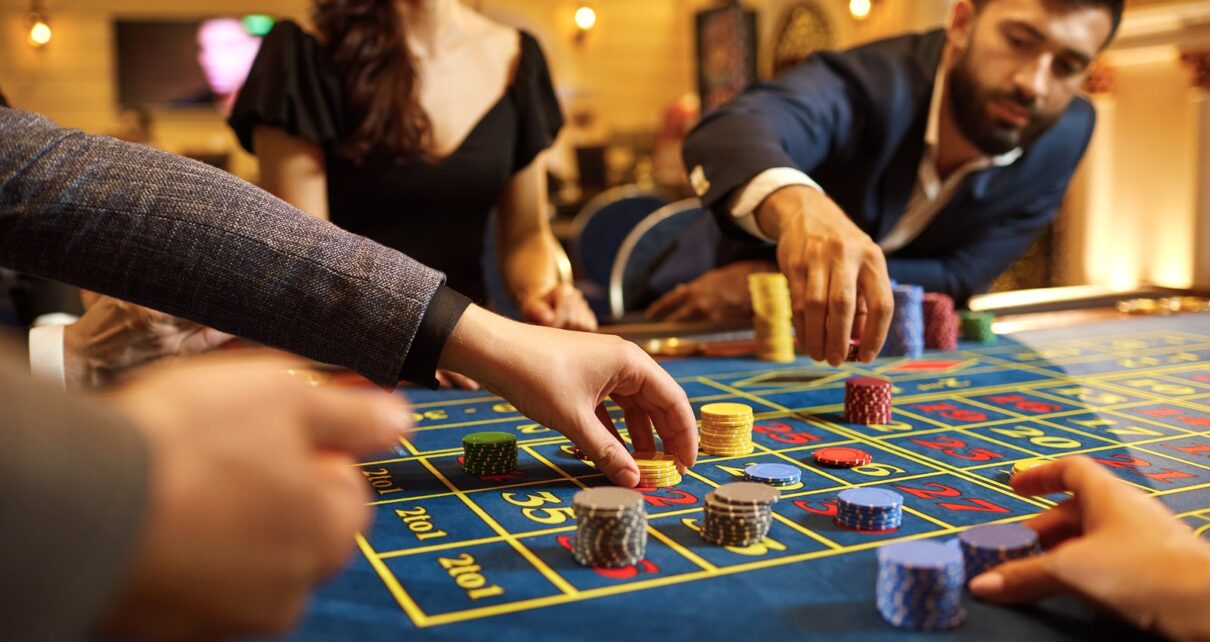
Roulette, with its iconic spinning wheel, presents a classic example of probability in action. Players place bets on where a ball will land, with various betting options offering different odds and payouts. Inside bets, such as betting on a single number, offer higher payouts but come with lower probabilities of winning. Outside bets, like betting on red or black, or odd or even, have higher probabilities of winning but yield smaller returns. The introduction of the zero (and double zero in American roulette) is what creates the house edge, ensuring that the casino maintains a statistical advantage over time, regardless of player outcomes.
For European roulette, which features a single zero, the house edge typically stands at around 2.7%. American roulette, with its additional double zero, doubles this house edge to approximately 5.4%. This difference is significant for players aiming to maximize their potential returns. When playing roulette, understanding these fundamental odds and the impact of the house edge is paramount for strategic betting. Players can opt for lower-risk outside bets for more frequent, smaller wins or chase higher rewards with riskier inside bets, all while being mindful of the inherent probabilities.
Blackjack Strategy and Probability of Busting
Blackjack is a game where player decisions significantly influence the outcome, making probability and strategy deeply intertwined. The core objective is to achieve a hand total closer to 21 than the dealer’s without exceeding 21 (busting). The probability of busting depends on the player’s current hand total and the dealer’s upcard. Basic strategy charts, derived from extensive probability calculations, provide the mathematically optimal play for every possible hand combination, aiming to minimize the house edge.
For instance, if a player has a hard 16 (no ace counted as 11) and the dealer shows a 10-value card, the probability of busting if they hit is high. In this scenario, basic strategy suggests standing. Conversely, if the player has a soft 17 (an ace and a 6) and the dealer shows a 7, hitting becomes a more favourable play despite the risk. Mastering these probability-driven decisions at a blackjack table can dramatically improve a player’s chances of winning over the long run, transforming it from a pure game of chance into one of skill and calculated risk.
Exploring Kaasino Casino’s Game Selection and Fair Play
Kaasino Casino aims to provide a diverse and engaging online gaming experience, offering a wide array of casino games for players to enjoy. From classic table games like roulette and blackjack, where probabilities can be analyzed and strategies applied, to a vast selection of slot machines with varying RTP percentages, the platform caters to different player preferences. The availability of games with demonstrably fair mechanics is a key aspect for any reputable online casino, ensuring that the probabilities are as advertised and the outcomes are truly random.
Players at Kaasino Casino can expect games that are powered by licensed software providers known for their commitment to fair play and rigorous testing. This means that the underlying probabilities and RTP figures for each game are independently verified, offering players confidence in the integrity of their gameplay. By understanding the true probabilities inherent in each game, and choosing to play at a trusted establishment like Kaasino Casino, players can engage with their favourite casino entertainment with a clearer perspective on the odds, potential outcomes, and the importance of responsible gaming.
